The oldest soldiers
11th August 1941: An evening drill of the Home Guard — old rifles, older men, and a seriousness that outsiders were too quick to mock.
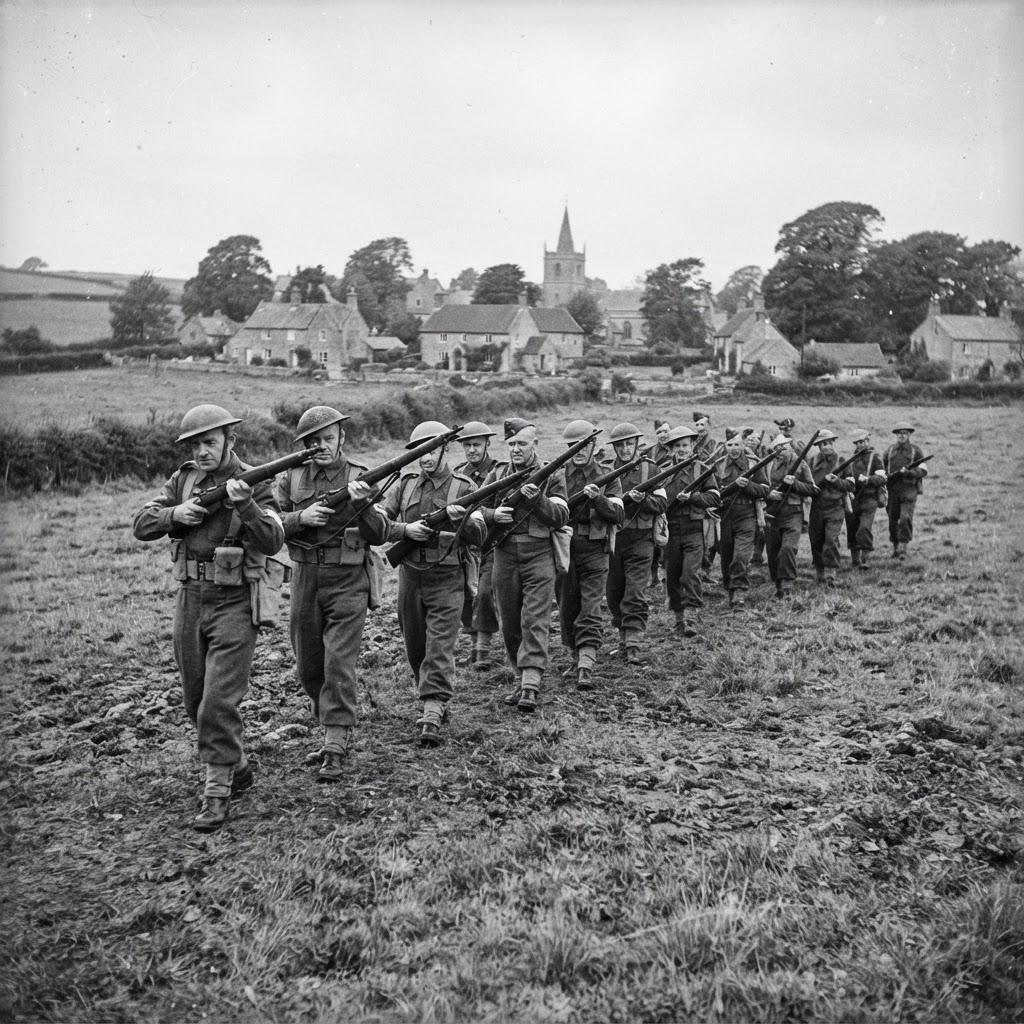
They fell in on the cricket field after tea, when the day's work was done — the butcher, the schoolmaster, two farmers, a bank clerk, and a scattering of men too old for the last war, let alone this one. Between them they could muster a fine array of medals and a rather smaller array of serviceable rifles.
It was easy to laugh at them, and plenty of people did. But the men on the cricket field were not playing. Most had seen real war twenty-odd years before, and they drilled with the grim thoroughness of people who knew exactly what they were rehearsing for and did not much enjoy the knowledge.
"We are the last line and we know it," the schoolmaster said. "If it ever comes to us, it will mean everything in front of us has already gone. We do not expect to win. We expect to make it cost something."
They practised the things their patch of country would need: blocking a lane with a farm cart, covering the bridge, knowing which fields a glider might use. Their knowledge of the ground was total, and it was the one advantage no invader could ever match — every ditch and gate and sunken track for miles was already mapped in their heads.
When the light failed they stood the rifles down and drifted back towards the pub and their homes, ordinary men again. The invasion they drilled against never came. But on those summer evenings, on cricket fields the length of the country, a great many quiet men had privately made up their minds, and that was not a thing to be laughed at.