The briefing before the raid
12th August 1941: A bomber navigator sets down the hour that hangs heaviest — the quiet room, the map, and the long wait before the aircraft roll.
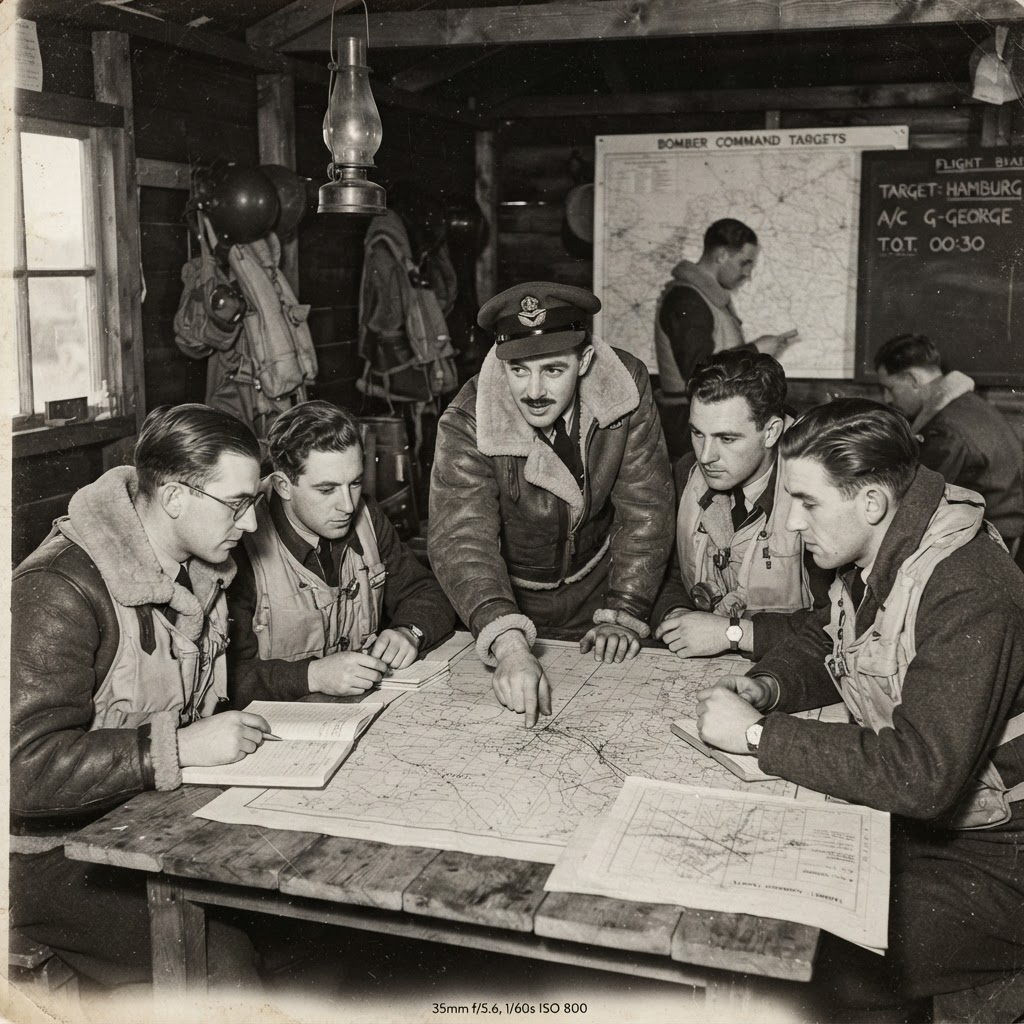
The worst hour of the whole business, he always said, was not over the target at all. It was the briefing — the crowded hut, the smell of damp battledress and cigarette smoke, and the covered map at the front of the room that every man in it was pretending not to look at.
When the cover came off you looked first at the length of the red tape stretched across it, because the length of the tape was the distance, and the distance told you almost everything: how long you would be out, how much of it would be over hostile ground, and how tired the gunners would be by the time it mattered most.
"Then the intelligence officer talks about flak and night fighters in the same flat voice a stationmaster uses for the timetable," he wrote, "and you write it all down, and none of it goes in, because the only thought in your head is the tape and the number of hours it means."
After the briefing came the waiting, which was worse — the letters written and rewritten, the too-large meal nobody wanted, the endless small rituals each man performed in the same order every time because to change the order felt like tempting fate. Then, at last, the trucks out to dispersal, and the enormous relief of finally having something to do with your hands.
Once the engines were running the fear went quiet. It was the room, always the room, that he remembered longest: the covered map, the flat voice, and the faces of men doing sums they would have given anything not to be doing.
Keep reading with a free trial
Subscribe to World War II Today to keep reading this post and get access to the full archive of daily dispatches from the Second World War.
Subscribe