
A night on the platform
13th August 1941: A year into the bombing, a Londoner describes the strange domestic life that has grown up on the platforms of the underground, far below the raids.
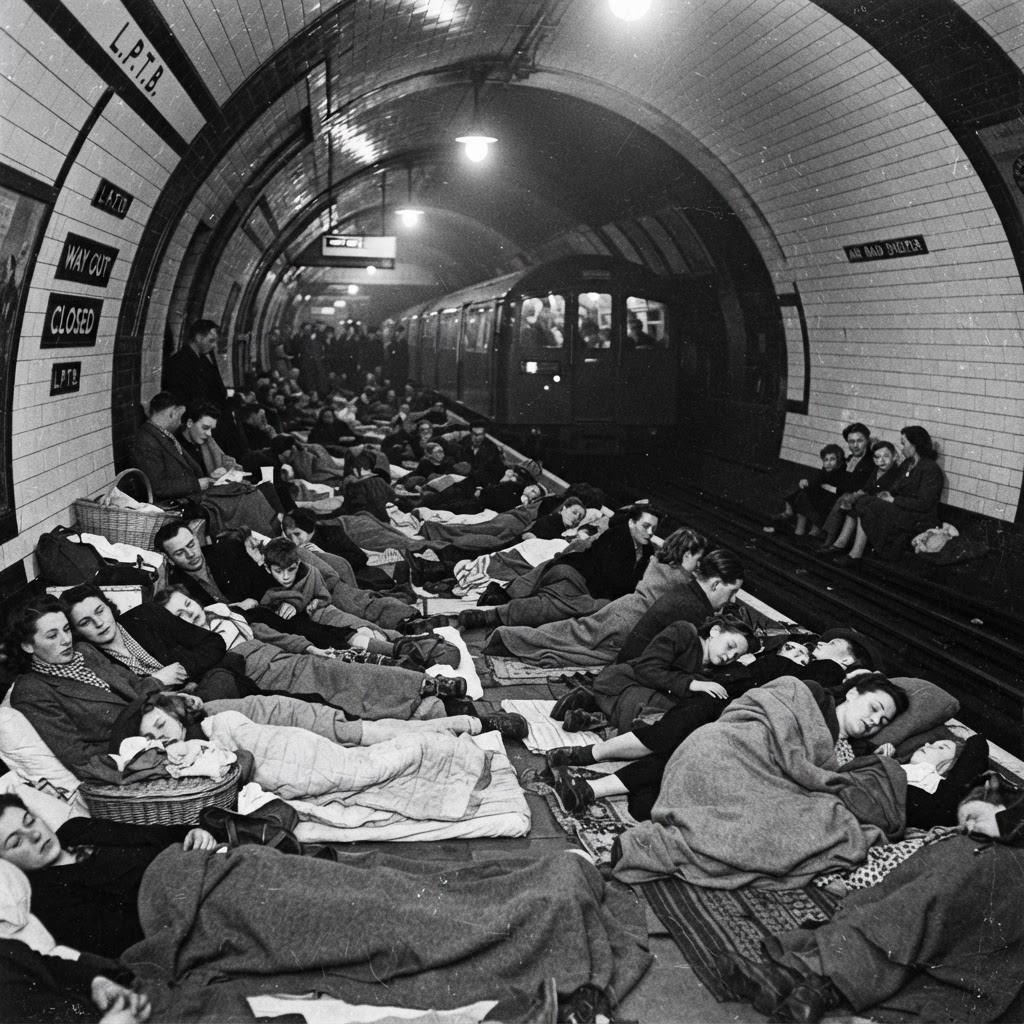
You went down early if you wanted a good place, she explained — a stretch of platform away from the draught of the tunnel mouth, but not so far along that you were kept awake by the trains still running. People marked their spots with chalk, with folded blankets, with a child sent ahead to sit and hold the ground until the family arrived.
By nine o'clock the platform was a long, low town. Old men played cards under the curved white wall. Women knitted and gossiped. Children who should have been terrified were instead thoroughly bored, and had to be shushed as they raced up and down between the sleeping bodies. Somewhere along the platform, most nights, somebody had a mouth organ.
"You'd not think a person could sleep down there," she wrote, "with the trains and the crying and the smell of all those people. But you did. You slept out of sheer stubbornness, because to lie awake was to think about what might be happening to the house above your head."
The raids, by that summer, had eased. Fewer bombers came now, and many nights passed with no siren at all. But the habit of the shelter had set hard, and thousands still went down out of a caution that had become almost superstition — as though the going down were itself what kept the bombs away.
In the morning they climbed the stairs into the daylight, folded their blankets, and went to work with the particular tiredness of people who have slept sitting up. The city they emerged into was battered but still standing, and so, against all their private expectations, were they.
Keep reading with a free trial
Subscribe to World War II Today to keep reading this post and get access to the full archive of daily dispatches from the Second World War.
Subscribe