Armour advances across the open desert
15th August 1941: A tank crew records the choking dust, the mechanical failures and the long silences between short, violent actions in North Africa.
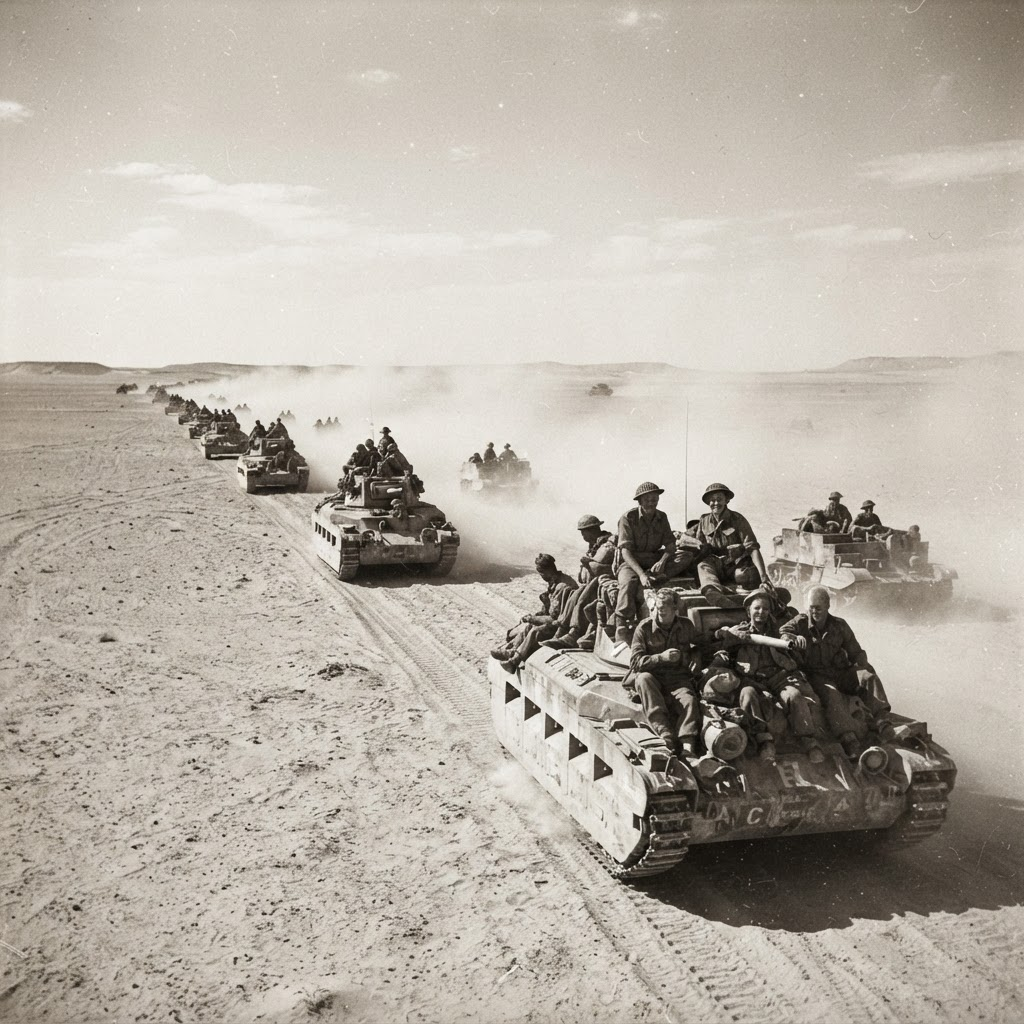
The desert was not the clean, empty place of the recruiting posters. It was a sea of fine grey dust that got into the food, the water, the engines and the eyes, and a heat that turned the inside of a tank into an oven by mid-morning. The crews learned to hate the dust more than they feared the enemy.
"We spent far more of the war mending the thing than firing it," the driver of one cruiser tank recalled. "A track would go, or the engine would seize with sand, and there you'd be, out in the open with your head under the louvres, praying nothing came over the ridge while you worked."
When action came it came suddenly, out of the shimmering haze, and was over almost before the crews had understood it had begun. A few minutes of noise and smoke and violent movement, a vehicle brewing up on the skyline, and then the long silence again, broken only by the wind and the ticking of hot metal.
At night the temperature fell away sharply and the men slept beside their machines, wrapped in every stitch of clothing they owned, listening to the far-off grumble of guns and wondering how the same country could be so cruel in both its heat and its cold.
For all the discomfort, there was a strange freedom to the desert war that many of the men remembered fondly in later years — a war of movement, fought at a distance, with a curious mutual respect between the two sides that the closer, dirtier fighting elsewhere would never allow.